
For many Indian homes, the pooja room is more than another functional space. It is a place for prayer, reflection, family traditions and quiet moments. As contemporary homes become more design-conscious, homeowners are looking for ways to create sacred spaces that respect tradition while fitting seamlessly into modern interiors.
This is where thoughtful Pooja Room Interiors can make a difference.
In apartments and villas across Hebbal and North Bangalore, the approach to mandir design is changing. Instead of treating the pooja area as an isolated corner, homeowners are integrating it into the overall design language of the home. Natural wood, stone, glass, brass accents, jaali partitions, warm lighting and custom storage can transform a simple prayer space into an elegant architectural feature.
For homeowners planning a new residence or renovating an existing one, working with experienced Mandir Interior Designers in North Bangalore can help balance aesthetics, functionality, proportions and traditional requirements.
Designing a Mandir That Belongs to the Home
A modern mandir does not necessarily have to look completely traditional. The most successful designs often combine familiar elements with contemporary materials and detailing.
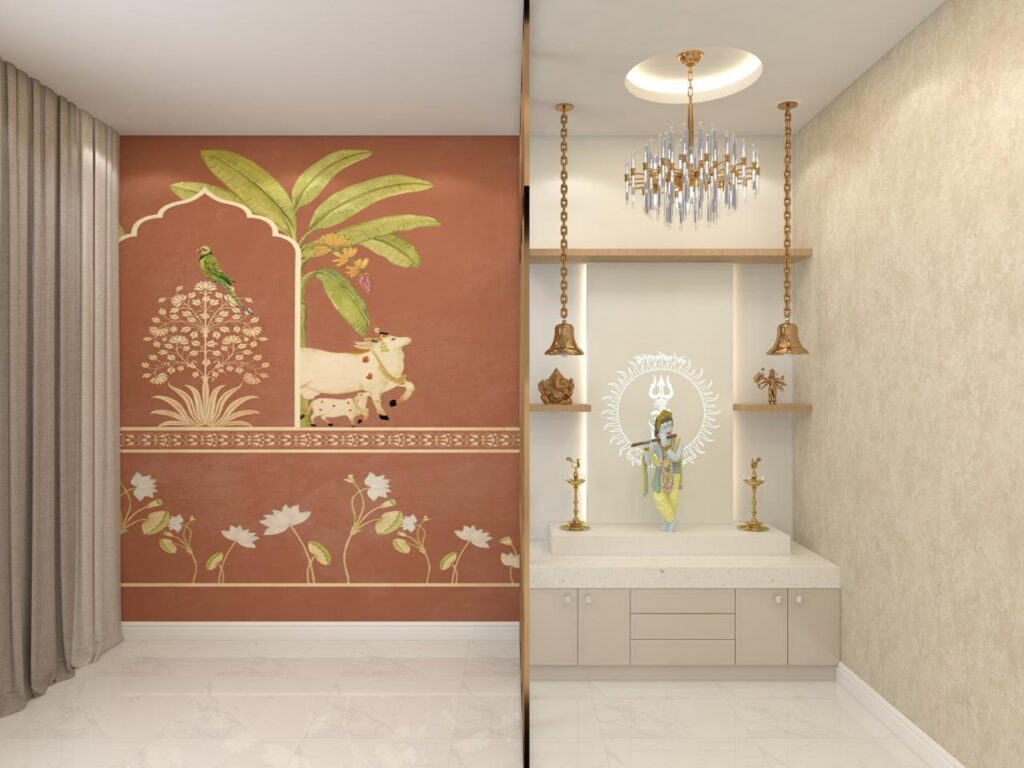
A wooden backdrop with subtle brass accents, for example, can create a warm traditional character while maintaining a clean modern appearance. Similarly, a marble platform paired with concealed storage and soft lighting can create a sophisticated pooja space without making the room feel visually heavy.
The first step is understanding how the mandir will interact with the surrounding interior.
In a spacious villa, the pooja room may have its own enclosed space with a doorway, carved panels or a statement entrance. In an apartment, the same design philosophy may be adapted into a compact wall-mounted unit, a niche or a semi-open partition.
The objective is not simply to create a beautiful shrine. It is to create a space that feels intentional, peaceful and connected to the rest of the home.
Pooja Room Ideas for Modern Apartments
Apartments often present a different design challenge. Floor area is limited, and homeowners may not have the luxury of dedicating an entire room to the mandir.
This makes space-efficient Modern Pooja Unit Design in Hebbal particularly relevant for contemporary apartments.
1. Wall-Mounted Pooja Units
A wall-mounted mandir can be an effective solution when floor space is limited.
The unit can incorporate a compact prayer platform, storage drawers and a decorative backdrop. Materials such as veneer, natural wood, marble-look surfaces or fluted panels can be used depending on the overall interior theme.
A wall-mounted design also keeps the floor visually clear, helping smaller rooms appear more spacious.
2. Pooja Niche in the Living Room
A dedicated niche can turn an unused section of the living or dining area into a meaningful prayer space.
The niche can be framed with wood, stone or a decorative partition. Warm LED lighting around the backdrop can visually separate the mandir from the surrounding space.
This approach works particularly well in apartments where creating a completely enclosed pooja room is not practical.
3. Jaali Partitions
Traditional jaali patterns can be interpreted in a contemporary way.
A laser-cut or CNC-designed partition can provide visual separation without completely closing the mandir. It allows light to pass through while creating a sense of privacy.
For a modern apartment, a simple geometric jaali may work better than an elaborate traditional pattern, particularly when the rest of the interiors follow a minimalist aesthetic.
4. Glass-Enclosed Mandirs
Glass can be used when homeowners want the pooja area to remain visually connected to the living space while still having a defined boundary.
Fluted, textured or clear glass can be combined with a slim wooden or metal frame. This creates a sophisticated transition between the sacred space and the rest of the home.
Pooja Room Design Ideas for Villas
Villas provide greater flexibility in terms of planning, scale and material selection.
A dedicated pooja room can be designed as part of the architectural layout rather than added later as a furniture unit.
For homeowners looking for premium Mandir Interior Design in North Bangalore, this creates opportunities to explore more detailed design elements.
A Dedicated Enclosed Pooja Room
A separate room allows the mandir to have its own visual identity.
The design could include a central deity platform, symmetrical storage, decorative wall panels and a carefully designed entrance. Wooden doors with traditional or contemporary detailing can add character to the space.
For a luxury villa, natural stone, marble, premium wood finishes and brass details can create a timeless appearance.
Double-Height or Statement Mandir Spaces
Larger villas may offer opportunities for a statement mandir with a taller backdrop.
A vertically extended wooden or stone panel can draw attention toward the deity and create a sense of scale. Carefully positioned lighting can emphasize the height without making the room overly bright.
However, larger does not always mean better. The proportions should remain comfortable and appropriate for the scale of the home.
Courtyard-Connected Pooja Spaces
In villas influenced by traditional Indian planning, a pooja room can sometimes be visually connected to a courtyard or landscaped area.
Natural daylight can enhance the atmosphere during the day, while warm artificial lighting can create a softer environment in the evening.
This approach is particularly effective when the architecture of the house already emphasizes natural materials and indoor-outdoor connections.
Choosing Materials for a Modern Mandir
Material selection plays an important role in defining the personality of the pooja room.
Wood
Wood remains one of the most versatile choices for pooja interiors.
Natural wood tones can introduce warmth, while darker finishes can create a more dramatic and traditional appearance. Light oak-inspired finishes can work well with contemporary interiors.
Marble and Stone
Marble can create a refined and timeless appearance.
White or light-toned marble can make the mandir feel calm and spacious, while darker stone can create a stronger visual contrast.
Stone can also be used selectively rather than covering the entire space. A stone backdrop behind the deity can become the focal point while keeping the remaining surfaces simple.
Brass
Brass is particularly effective as an accent material.
Instead of using excessive ornamentation, contemporary designs can introduce brass through bells, lamps, borders, handles, decorative panels or small inlay details.
The result is a subtle connection to traditional Indian design without making the space appear dated.
Glass
Glass works well for partitions and enclosed units.
It can be particularly useful in apartments where homeowners want to define the mandir without visually reducing the size of the room.
Lighting That Creates the Right Atmosphere
Lighting is one of the most important elements of successful Pooja Room Interiors.
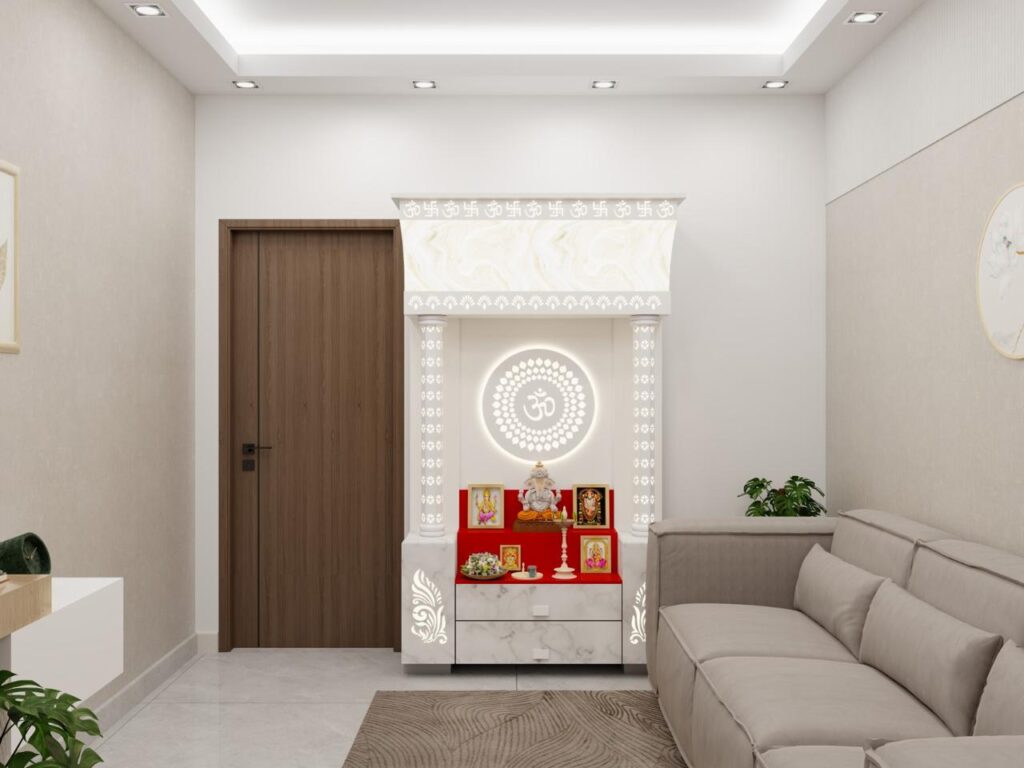
A mandir should not simply be brightly illuminated. The lighting should create warmth, focus and visual calm.
Backlit Panels
A softly illuminated stone, marble or translucent panel behind the deity can create a beautiful focal point.
The lighting should be diffused rather than harsh, particularly when the mandir is intended to be used in the early morning or evening.
Warm LED Lighting
Warm lighting can enhance wood, brass and stone surfaces.
LED strips can be concealed behind panels, shelves or architectural details to create a soft glow without exposing the light source.
Focus Lighting
A small amount of focused lighting can highlight the central deity or important decorative details.
The goal should be to create hierarchy: the deity remains the visual focus while the surrounding architecture supports it.
Storage Should Be Part of the Design
A beautiful mandir also needs practical storage.
Pooja essentials can include lamps, incense, prayer books, containers, flowers, vessels and other accessories. Leaving these items exposed can make the space look cluttered.
Custom drawers and concealed cabinets can solve this problem.
In compact apartments, storage can be integrated beneath the prayer platform. In larger villa mandirs, full-height cabinets can be incorporated into the side walls.
The storage should remain visually subtle so that the mandir retains its calm appearance.
Open vs Enclosed Pooja Room: Which Works Better?
There is no single solution that works for every home.
An open mandir is suitable for homeowners who want the prayer area to remain visually connected with the living space. It works particularly well in compact apartments.
An enclosed mandir, on the other hand, creates greater privacy and allows the room to have a distinct material, lighting and colour palette.
Semi-open solutions can offer a middle ground. Wooden screens, glass partitions and jaali panels can define the space without completely separating it.
The right choice depends on the home’s layout, available space, family requirements and overall interior style.
Designing for Different Interior Styles
A modern mandir should complement the home’s broader design language.
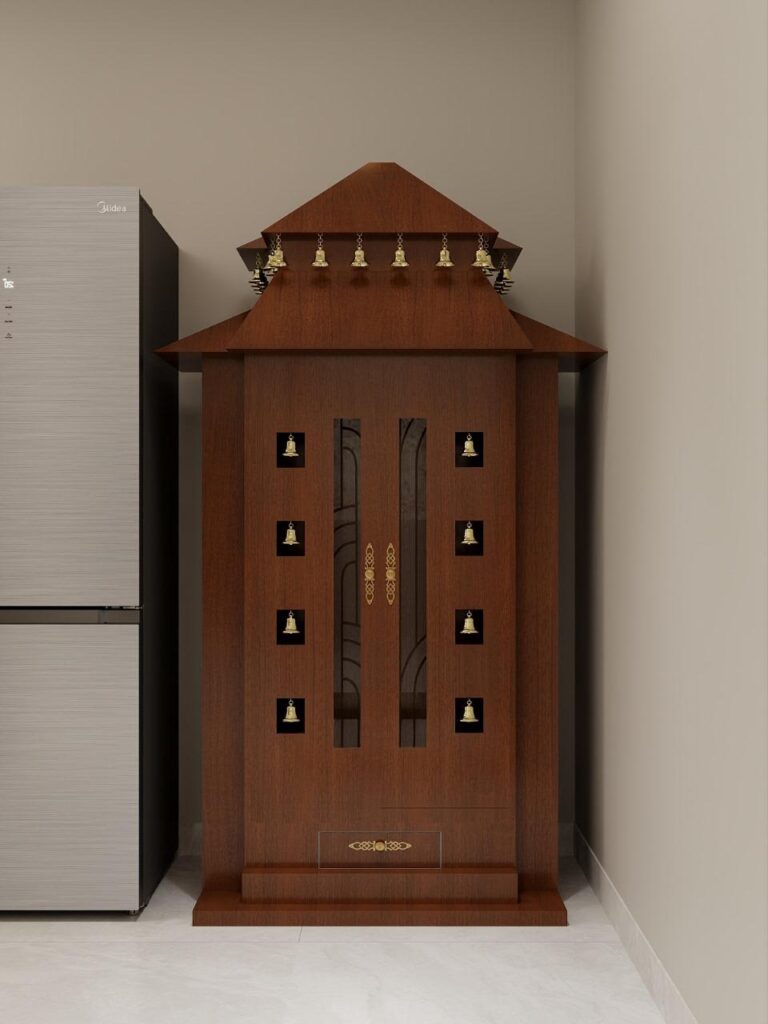
For a minimalist home, a clean wooden unit with concealed storage and limited decorative elements can work beautifully.
For a contemporary luxury home, marble, brass, textured panels and layered lighting can create a sophisticated appearance.
For a traditional-modern home, carved wood, jaali details and brass elements can be combined with contemporary cabinetry and lighting.
For a luxury villa, a dedicated room with a statement backdrop, custom doors and premium materials can become an architectural highlight.
This is where professional planning becomes valuable. Rather than selecting a standalone pooja unit, the mandir can be designed as part of the complete interior scheme.
Why Work With Pooja Room Interior Designers in Hebbal & North Bangalore?
Designing a pooja room involves more than choosing a backdrop and placing a deity.
The designer needs to consider proportions, circulation, storage, lighting, materials and how the mandir interacts with adjacent spaces.
For homeowners in Hebbal and surrounding North Bangalore neighbourhoods, working with Pooja Room Interior Designers in Hebbal & North Bangalore can provide a more coordinated approach.
A professional interior design studio can develop a customised solution based on the home’s architecture rather than relying on standard modular units.
This becomes particularly important in villas and premium apartments where homeowners want the mandir to feel unique and consistent with the rest of the interior.
Creating a Timeless Mandir for a Modern Home
Interior trends change, but a pooja room should ideally remain relevant for many years.
Instead of following short-lived decorative trends, homeowners can focus on timeless materials, balanced proportions and quality detailing.
Natural wood, stone, brass, warm lighting and restrained decorative elements can create a mandir that feels contemporary today while retaining its connection to Indian traditions.
The most successful Mandir Interior Design in North Bangalore is not necessarily the most elaborate. It is the design that understands the home’s architecture, respects the significance of the space and creates an environment that feels peaceful every time it is used.
A Thoughtfully Designed Pooja Space by Umber Interio Studio
For homes in Hebbal and North Bangalore, the pooja room can become much more than a functional corner. With the right planning, it can become a carefully integrated part of the home’s architecture and interior experience.
At Umber Interio Studio, the approach to interior design focuses on creating spaces that balance functionality, materiality and individual lifestyle. From compact apartment mandirs to dedicated villa pooja rooms, every element can be considered as part of the larger interior design.
Whether you are planning a Modern Pooja Unit Design in Hebbal, renovating an existing prayer room or designing a complete villa interior, a thoughtfully planned mandir can bring together tradition and contemporary design in a way that feels personal to your home.
Looking to create a refined pooja room for your home in Hebbal or North Bangalore? Explore a customised interior design approach with Umber Interio Studio.
FAQs
1. What are the best pooja room designs for apartments in North Bangalore?
Wall-mounted mandirs, pooja niches, compact wooden units, glass partitions and jaali-enclosed designs are practical options for apartments. The best solution depends on available space and the overall interior layout.
2. How can I create a modern pooja room in a small apartment?
A compact wall-mounted unit with concealed storage, a decorative backdrop and warm lighting can create a functional modern mandir without occupying significant floor space.
3. What materials are suitable for modern pooja room interiors?
Wood, marble, natural stone, glass, brass and high-quality laminates or veneers can be used depending on the desired aesthetic and budget.
4. Should a pooja room be open or enclosed?
Both options can work. Open mandirs are suitable for smaller homes and visually connected layouts, while enclosed rooms provide greater privacy and a stronger sense of separation.
5. How can I add storage to a pooja room without making it look cluttered?
Concealed drawers, cabinets beneath the prayer platform and integrated side storage can keep pooja essentials organised while maintaining a clean appearance.
6. What lighting is best for a pooja room?
Warm, diffused lighting is generally suitable for creating a calm atmosphere. Concealed LED strips, backlighting and focused accent lighting can be combined to highlight important elements.
7. Can a pooja room be designed as part of a living room?
Yes. A pooja niche, wooden partition, glass enclosure or jaali screen can define the mandir while allowing it to remain visually connected to the living area.
8. What is a good modern pooja unit design for homes in Hebbal?
A custom wall-mounted wooden or stone-finished unit with concealed storage, warm lighting and a simple decorative backdrop can work well for modern homes in Hebbal.
9. How do I choose a pooja room interior designer in North Bangalore?
Look for an interior design studio with experience in residential projects, customised space planning, material selection, lighting design and integrated interiors rather than only standalone pooja units.
10. Can Umber Interio Studio design pooja rooms for villas and apartments?
Yes. Pooja spaces can be planned as part of apartment or villa interiors, with the design adapted to the home’s layout, architectural style, storage requirements and overall interior aesthetic.